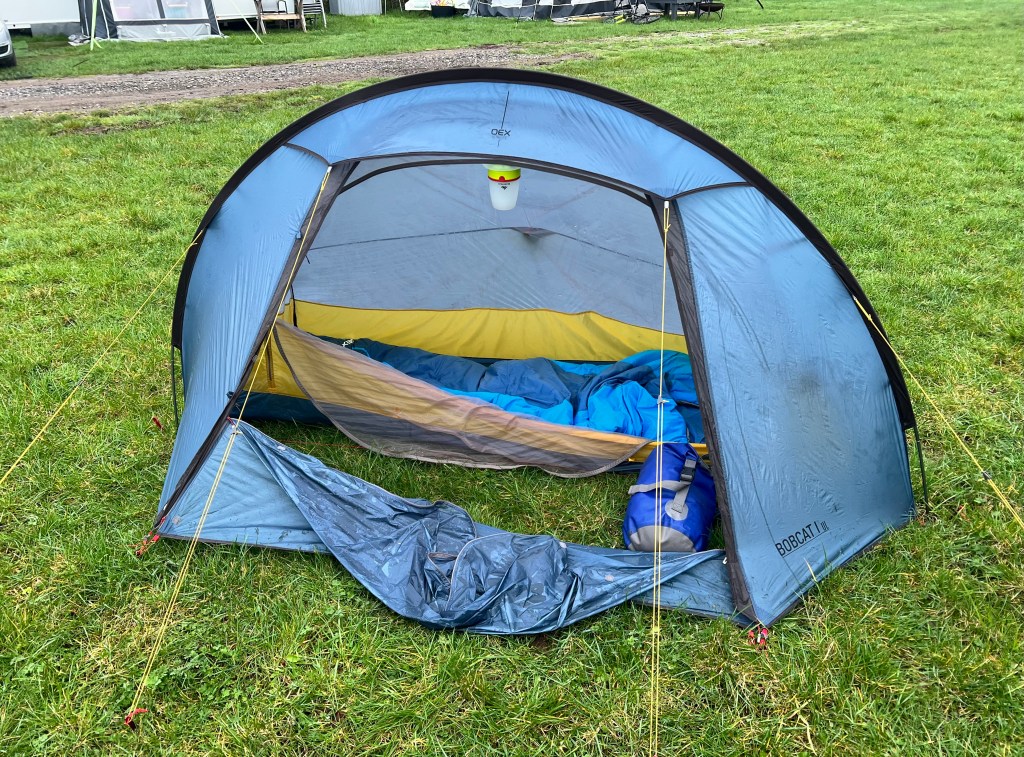
With a summer of bikepacking ahead, it was time for a new tent. Like any self-respecting outdoorsy chap I have a range of tents, from the enormous five metre family bell tent (read about that one here – I reviewed it in 2020!), through small mountain tents with dodgy poles, and even the odd Eastern European canvas shelter. But a ten-day cycling trip across the Alps calls for something I don’t have – an ultralight tent. Time to go shopping.
I’m very much a ‘see before you buy’ guy and this gave me a few options from our local Go Outdoors: OEX’s Salamanda Bivi Bag and the two ultralight tents from the same company, the Phoxx and Bobcat. The guys in the shop were super helpful and demoed the Salamanda for me: an impressively tiny bivi bag with a one pole set-up, a really eye catching bit of kit. However I wondered about the comfort of sleeping in it for multiple nights, not being able to sit up and have a coffee in it for example. The Phoxx’s low profile presented similar issues.
So I went away and deliberated on the Bobcat. At £180 it was quite an investment but seemed to tick all the boxes. I was surprised at the mixed nature of the reviews, many complaining about the thin material and mocking its modest waterproofing. It wouldn’t stand up to a couple of days of rain and wind in the mountains, was the general gist of most commentators. But is it supposed to?
The big sell of the Bobcat is its size – it’s about the same weight as a bag of sugar and packs down not much bigger than one. To get to those proportions you have to make sacrifices and the lightweight fly sheet is made of a thin nylon material that clearly isn’t going to stand up to a weekend of pouring rain and wind in the Lakes. But we already have tough mountain tents for those conditions. What we don’t have is a tiny tent that weighs nothing and can be slung on a bike or in a small camp for more agile work in less challenging conditions. Not at this price, anyway.
Like this blog? Enter your email above and you’ll get a friendly email every time I post.
So I took the plunge and bought the Bobcat.
It’s small, light and easy to put up. The design is well thought out with just the right number of clips and guyropes without being too faffy, and there is even a degree of minimalism in the number of pegs needed. It seems pretty secure, although it sticks up like a half-buried coin and you probably wouldn’t want to back it into the wind. So the design gets a good score from me.
Inside is small. I’m an average sized bloke and I can just about lie down in it. Moving around and getting dressed required some yogic manoeuvres that my body wasn’t quite prepared for. I don’t think I could comfortably get any kit inside the tent with me, though there are pockets for phones, glasses and keys. The porch space is a bit of a waste though – it needs to have a groundsheet to keep kit off the ground, and I expect the reason it doesn’t it to keep the weight below that headline kilogram mark. You can buy an additional groundsheet for an extra £25 that solves this issue, but you shouldn’t really have to, right? This niggle aside I was happy, and I liked being able to sit up on my sleeping mat and gaze out at the world from inside my tent while I had breakfast. That’s a definite advantage over the Phoxx and Salamanda.
Other reviewers have mentioned issues with condensation and this was a worse problem than I first realised. The tight angles, particularly at the top of the porch, don’t allow any airflow and it was surprising how much moisture gathered here. I wondered for a while why my tent wasn’t really drying in the breeze before I realised that the droplets of water were on the inside of the tent not the outside. This may bother you more than it bothered me.
I’ve slept a couple of nights in it in early March and it does the job. One night was heavy drizzly fog and the inside stayed dry and I slept well enough. It’s super quick to put up and take down, lightweight and seems waterproof enough for most lowland conditions. It isn’t designed for the mountains in bad weather but that doesn’t make it a bad tent; it just means you made a bad choice to take it out of its comfort zone. I’m very happy to add it to my growing collection of tents, and I think it’ll get a lot of use this summer.
 Blaggers' Blog